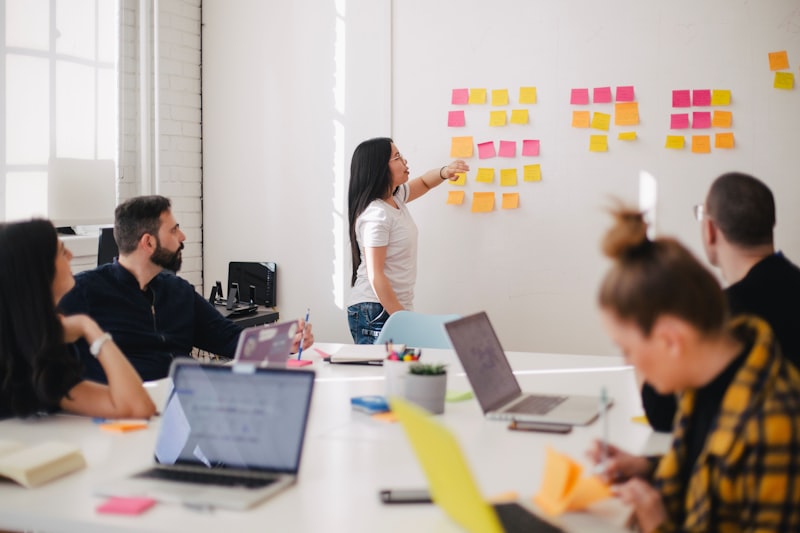
Purpose & Scope
RCOS Layer 0
Defines why the community exists, what is governed, and which invariants cannot be violated. This layer prevents hidden ideology, scope creep, and informal power from shaping the system.
We are co-creating the world's first open-source blueprintAlso called "RCOS" – Regenerative Community Operating System for regenerative communities — where technology supports life, and people live in harmony with nature.
A growing movement of people designing regenerative communities.
Join the pioneers shaping the first 500-member co-creation network.
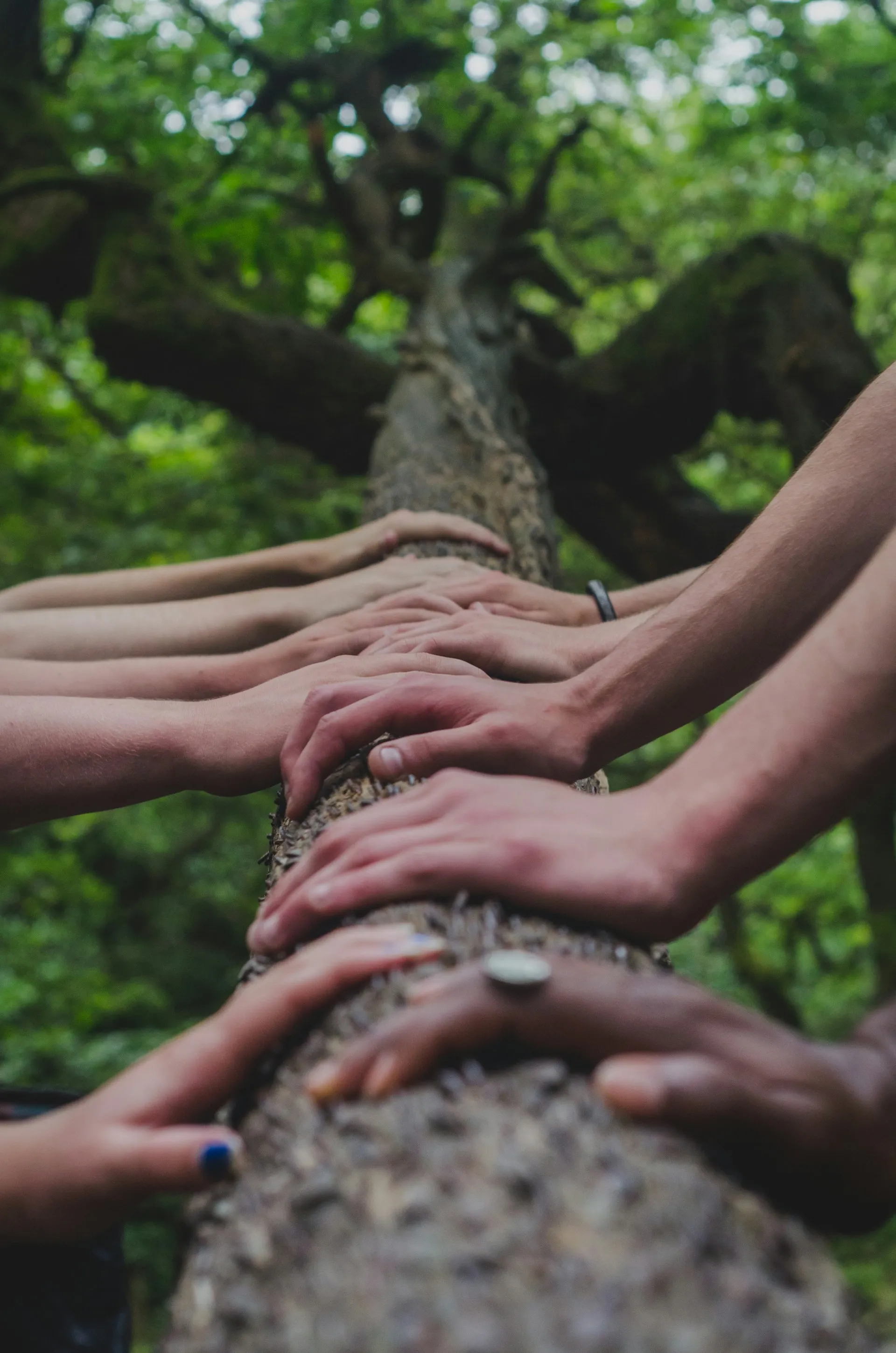
Modern society faces disconnection, ecological crisis, and fragmentation. We are redesigning how we live together to restore trust and wholeness.
We are more connected than ever, yet feel more alone. Traditional community bonds have eroded.
EcoHubs designs intentional communities where belonging is built-in, not an afterthought.
Extractive systems are depleting our planet. We need regenerative models that give back more than they take.
Our blueprint (RCOS - Regenerative Community Operating System) shows how communities can become net-positive for ecosystems.
Opaque governance leaves people feeling powerless. We build systems where every voice matters.
DAO (Decentralized Autonomous Organization) governance returns power to communities through transparent, auditable systems.


Imagine communities designed like forests—resilient, diverse, and self-sustaining. Our unique blueprint approach combines ecological wisdom with decentralized governance, creating living systems that evolve through real-world practice.
Technology can be extractive—but it can also unlock solutions that communities struggled with for generations. We use it consciously, choosing digital tools that strengthen transparency, cooperation, and ecological integrity.
Inspired by nature, we apply modern systems without becoming dependent on them. Technology supports life, not the other way around.
Our blueprint (RCOS) grows from practice. Every pilot project becomes a living laboratory where solutions are tested, refined, and shared.
Like a mycelial network, our intelligence expands through connection. The blueprint (RCOS) is open-source, shaped by everyone who contributes.
We design communities as whole systems—where housing, food, water, energy, and culture work together as a resilient living ecosystem.
The Blueprint, formally called RCOS (Regenerative Community Operating System), is the main deliverable of EcoHubs. It is a shared, open standard that helps communities make their structure explicit: how decisions are made, how people join and leave, how resources are managed, how conflicts are handled, and how the community evolves over time. The goal is not to impose a single way of living, but to provide a clear, modular system that communities can adapt, test, and improve together.
Defines why the community exists, what is governed, and which invariants cannot be violated. This layer prevents hidden ideology, scope creep, and informal power from shaping the system.

Makes membership explicit: how people join, participate, change status, and exit. Rights and obligations are symmetrical and legible, so belonging never depends on informal approval.

Defines how decisions are made, who can decide what, and how authority is constrained. Governance power is explicit, reviewable, and never derived from charisma or status.

Clarifies how value flows inside the community: commons vs private resources, contributions, internal economies, and treasury rules. Prevents invisible labor and economic power accumulation.

Defines how conflicts are handled, repaired, and escalated. Provides due process, safety safeguards, and accountability without relying on informal exclusion or silence.

Makes daily work possible without burnout: roles, meetings, documentation, and workload boundaries. Coordination is explicit so the system does not depend on heroics.

Defines how the system evolves over time through versioning, experiments, and learning. Change is possible, but always constrained, reversible, and documented.

Permaculture, education, housing, energy, culture, and more. Modules extend RCOS into real-world domains without changing the core rules of the system.
The Blueprint is the applied view of RCOS: core layers, modules, artifacts, and stress tests. Open, evolving, and designed to be adapted by real communities.
Explore BlueprintOur First Tangible Outcome
The Blueprint is the first real result of our collaborative work — an evolving, open-source document shaped by the community.
EcoHubs is not just a theory. Today, we collaborate online — co-creating the blueprint, building tools, and growing a community of contributors. In the future, we plan to apply our blueprint through pilot projects at new or existing communities.


EcoHubs is for people who feel the old models no longer work, and who want to co-create regenerative communities rooted in ecology, cooperation, and transparent governance.
Permaculturists, ecologists, and land stewards seeking community models that honor nature's patterns.
Those who've dreamed of intentional communities but lacked the tools and blueprint to make it real.
Builders interested in using blockchain for governance, transparency, and regenerative impact.
Those seeking systemic solutions beyond individual actions—community-scale regeneration.
Early believers in new models for living—collaborative, open-minded, visionary.
Those ready to trade isolation for belonging, extraction for regeneration, hierarchy for collaboration.
EcoHubs was founded by Stefan Lessle, a developer and systems thinker with 16 years of experience building digital platforms and decentralized tools. After a long journey through Europe and Latin America studying regenerative communities, he saw how many struggled with transparent governance and shared responsibility.
Now based in Ecuador, Stefan is dedicated to bridging ecology and technology—researching land, community dynamics, and regenerative practices while developing tools that help people live together with more trust, clarity, and cooperation. EcoHubs is not a hobby for him, but a lifelong commitment to designing healthier, human-scale ways of living.
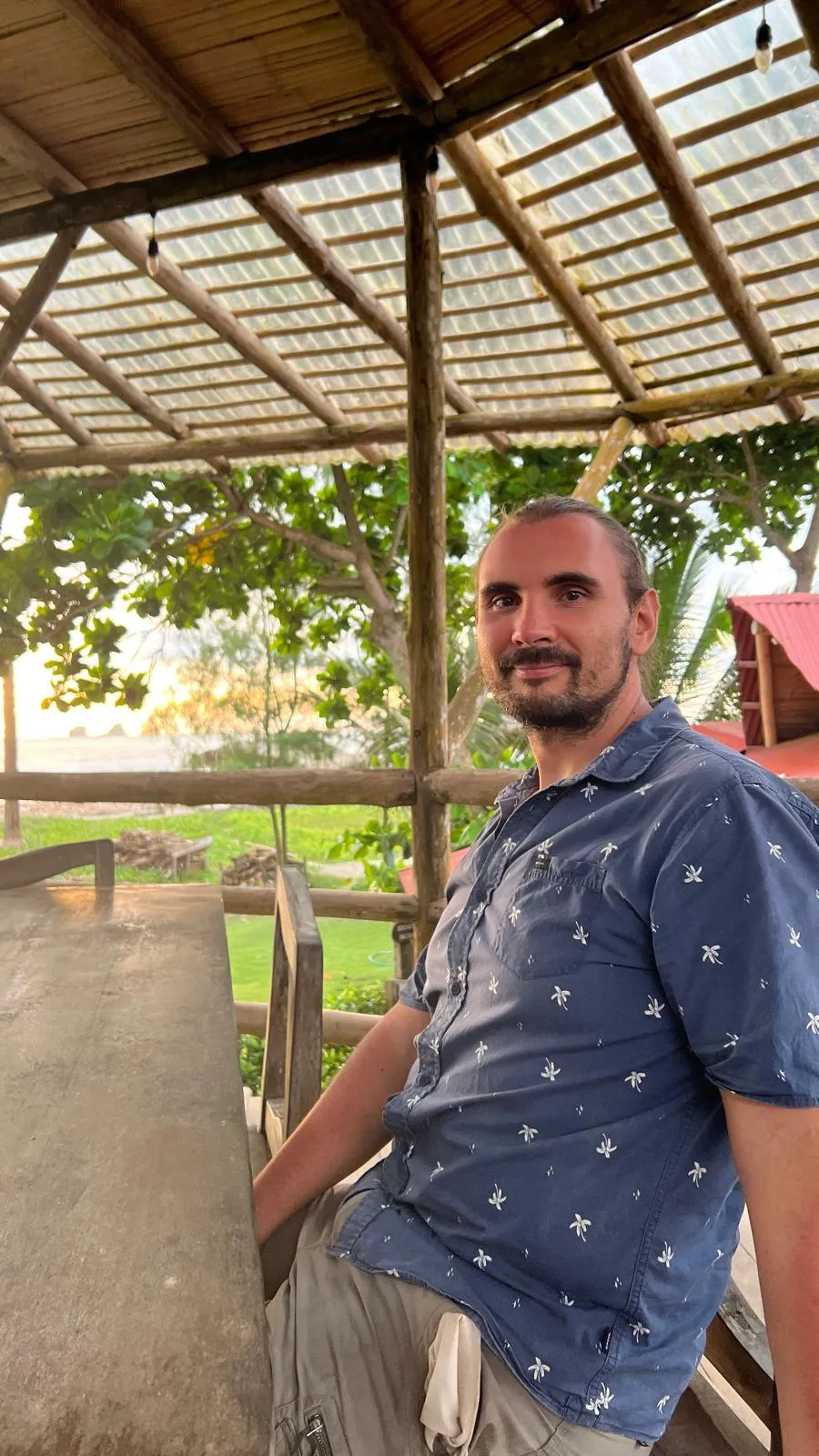
Founder
Stefan Lessle
Software Engineer & Community Designer
We're not just another DAO or ecovillage project. Here's what sets us apart.
Unlike proprietary models, our blueprint is fully open-source. Anyone can use, adapt, and improve it. No gatekeeping.
We don't choose between nature and technology. We use transparent, decentralized tools for fairness and trust, while staying grounded in ecological principles.
We're not just theorizing. Pilot projects will test and refine every aspect of the blueprint before scaling globally.
The blueprint evolves through community practice, not top-down planning. Every member shapes what comes next.
A clear path from vision to reality. Here's where we're heading.
Gather the first 500 aligned members, establish shared values, and co-create the foundation of the EcoHubs blueprint.
Gather the first 500 aligned members, establish shared values, and co-create the foundation of the EcoHubs blueprint.
Design and refine the open-source blueprint together—covering ecology, governance, architecture, education, and culture—while launching the DAO and governance framework.
Design and refine the open-source blueprint together—covering ecology, governance, architecture, education, and culture—while launching the DAO and governance framework.
Apply the blueprint through pilot projects at new or existing regenerative communities, test it in real conditions, refine it together, and document everything openly for global replication.
Apply the blueprint through pilot projects at new or existing regenerative communities, test it in real conditions, refine it together, and document everything openly for global replication.
Help us shape the blueprint. Join a curated group of regenerative thinkers, builders, and creators.
We're looking for permaculturists, community builders, Web3 contributors, regenerative designers, and anyone committed to co-creating a better way to live together.